
Gateway for Library and Information Science Students to clear UGC NET and other Competative Examinations

Monday, July 13, 2020

Rivers may sometimes flooded with water but they are the chains of our culture......

Today I sat beside the banks of river Brahmaputra which is locally known as siang river in Arunachal Pradesh... Since last 20 days there was insistent rains which made the heavy water forces in the river of Brahmaputra. After a long gap myself with my friends sat near the river to enjoy the beauty of the river and greenary present around the area. 
It is one of the best experience I have ever seen by visiting this area. People from the local enjoying with their families, some are trying to catch fish by using a local catching methods.... Some are swimming.... Some are chatting..... Many things happening here...  But my eyes what focus on the flow of the water where I have seen the water flow on the rocks....

Wednesday, July 8, 2020

The Man we need in this pandemic times.....

It is a hot afternoon as P. Subburaj mans his station at the *Open Public Library* near Officers Colony at Puthur, opposite Mahatma Gandhi Memorial Government Hospital.

The lockdown has reduced traffic to the reading spot in recent months, but *87-year-old Mr. Subburaj is happy to be at work* as one of the three guards who take care of the public library through the day.

“My shift starts at 6 a.m. and goes on until 6 p.m., when two other staff come in for the night. We keep an eye on these books, and also see that that the premises is kept clean,” Mr. Subburaj told The Hindu
Inaugurated in December 2018 by Tiruchi Corporation at a cost of ₹20 lakh, the facility includes covered reading areas with concrete benches and a few chairs for visitors. Approximately 500 books on various topics in English and Tamil are available for on-the-spot reading at the library. Visitors are also welcome to exchange their own reading material with those in the library.

Mr. Subburaj and his colleagues are employed by Star Security Force, a private company that is in charge of the library’s daily upkeep.

“The visitor numbers have dropped during the lockdown, but we hope they will improve as the situation eases over the next few months,” said R. Selvaraj, proprietor of Star Security Force. “The city needs more open libraries, as they will encourage the reading habit among children,” he said.

A former mill worker and tea stall owner, Mr. Subburaj, who lives in Periya Milaguparai area, gets a lift to and from work from his relatives every day. He also helps to guide the people queuing up for free breakfast and lunch at the daily camp run by a social service organisation adjoining the library premises.

“Lunchtime can be a bit crowded, and since people are hungry, they tend to get impatient. I tell them to maintain social distance, and also wear their masks so that they can stay healthy,” said Mr. Subburaj.

https://www.thehindu.com/news/cities/Tiruchirapalli/lockdown-duty-guarding-the-books/article31973629.ece _shared by stephen_

Tuesday, June 30, 2020

Best telegram channels for Library and Information Science community....

Telegram is one of the fast growing messaging application... This particular app have more advantages for the learning community than the usual chit chatting community... there are various groups/channels available in telegram to help the students as well as professional in the field of Library and Information Science.. here we are mentioning some of them....

1. Library Science study zone
Discussion on  MCQ practice set for UGC-NET, SLET, DSSSB, NVS, KVS, RSMSSB and other competitive exam.
https://t.me/elibstudy 

2. Libraryscience4U.com
https://t.me/libraryscience4ucom
All webinars and Library Sc. Quiz for NET,KVS,NVS,DSSSB.

3. LIS Links
This is the Telegram group of LIS Links (www.lislinks.com). The members of this group will receive digest message covering news, jobs and upcoming events (seminars /conferences /workshops / trainings) in Library and Information Science in India.
https://t.me/lislinks

4. World of Library & Info.science

5. LIS Information Group
A Group to Share LIS Information and Open Access Resources https://t.me/lisgroup

6. Library and Information Science 
Quiz for NTA NET/JRF, RSMSSB, DSSSB, KVS, NVS, , M. L. I. Sc. entrance exam and other competitive exams.
https://t.me/ImteyazulHaque

7. Library Professionals India.!🇮🇳📗
This Group is for LIS Professionals in India. The members of this group will receive LIS News Updates LIS jobs in India, & Upcoming LIS events / webinars/seminars / conferences / workshops.
https://t.me/LibraryProfessionals_India

8. LIS Target
Dear Library professionals Visit here for library science related information and jobs, Quiz. 
https://t.me/listarget

Thank you 

Yours

Rajasekhar Gopalasetti
raajasekhar2020@gmail.com

Short stories vending machine - an interesting innovation....

I have been curious about to know various innovations made in the field of Library and Information Science... While surfing on the internet I have found a very interesting topic about short stories vending machines.The Vending Machine That Spits Out Short Stories". I think it is one of the best innovations made in the field of publishing industry... The people of the 21st century couldn't find time to read books/ novels/ magazines even newspapers. we all are habituated to use the handheld mobile phones known as smartphones which have more disadvantages than the advantages.. in fact getting information is easy and quick by using mobile phones but we are lacking concentration while reading online... The idea behind these vending machines is printing a short story on a piece of paper like a grocery bill which we can use to read during journeys and leisure times... it also costs very cheap as we are no need to purchase the entire book... These machines were created by French company Short Édition, the vending machines feature thousands of stories printed on scrolls of eco-friendly papyrus. In countries like London, Paris, France, Hongkong etc... These machines have become a favorite for travelers... For some upcoming writers, writing a short story is easy rather than writing a big novel or book of episodes... This type of vending machine will encourage such type of writers to publish their stories to get public attention. At airports, railway stations these machines will create people more comfortable to read during their waiting time. As of now there are the vending machines with only printing facility... Hoping that there will be touch enabled screen to select desired story to print so that people feel more advantage in reading their loving story based on title/author ir publisjer....  Let us hope that soon these types of machines will appear in India and brings lot of happiness to enthusiastic readers..... 
Thank you....  

Yours 
Rajasekhar Gopalasetti
raajasekhar2020@gmail.com

Source:
1.https://www.nytimes.com/2018/04/16/books/short-story-vending-machine.amp.html
2. "These vending machines are giving out free short stories to London commuters | World Economic Forum" https://www.weforum.org/agenda/2019/04/these-vending-machines-are-giving-out-free-short-stories-to-london-commuters/
3. https://www.mentalfloss.com/article/70467/french-vending-machines-dispense-short-stories-instead-snacks
4. https://www.dailyherald.com/news/20190412/glen-ellyn-library-has-a-little-kiosk-that-spits-out-short-stories-and-patrons-love-the-surprises

Monday, December 9, 2019

Hello Viewers.....

Today i am posting here links of important LIS Material available by various websites....... hope these will help you....

click on following imagese
 wikiversity


 open michegon

Wednesday, June 5, 2019

Nimble

http://sureskumar.com/?p=134

Nimble

https://wp.me/pIFpu-18M

Sunday, May 26, 2019

10 amazing women in science history you really should know about

https://www.sciencefocus.com/science/10-amazing-women-in-science-history-you-really-should-know-about/

The next generation of library managers

https://libraryconnect.elsevier.com/articles/next-generation-library-managers

Saturday, May 25, 2019

Guidelines to write literature review

"Guidelines for writing a literature review" https://www.duluth.umn.edu/~hrallis/guides/researching/litreview.html

Friday, June 8, 2018

How to write a PhD Thesis Faster and Beat Deadlines


How to write a PhD Thesis Faster and Beat Deadlines
How to write a Ph.D. Thesis Faster and Beat Deadlines
Deadlines are real. When you study Ph.D., you will realize that you don’t have the luxury of time to procrastinate. Unfortunately, getting your paper done on time is your only ticket of getting a Ph.D. degree.
If you’re going to write a Ph.D. thesis that works, you need a solid game plan. Remember that your paper will explain all the research and experiments you’ve gone through your four-year journey.
So if you think there is no other way, think again. Fortunately, there is a plan on how you can write a decent Ph.D. thesis faster that will nab you a place on the stage for graduation.
In this article, I will share with you a minute-by-minute guide on how you can complete your Ph.D. thesis in approximately two-week time without losing your sense of style and fancy.
Tip 1: Establish your thesis statement
Producing a quality Ph.D. thesis in a short time depends on how well you understand your How to write a PhD Thesis Faster and Beat Deadlinestopic. We all know that a research paper is where you make an assertion or prove something that is novel to the academia.
So ask yourself these questions. What are you trying to prove? Are the issues presented in your thesis something new and interesting? Do you think your supervisor would approve your topic?
Your thesis statement should be succinct and thought-provoking. It could be an old assumption that you want to challenge through new scientific methods or a novel discovery that you want to establish as true to the people.
As you see, before you can write anything you first need to determine your thesis statement. Once you’ve laid down the premises, more brilliant ideas will follow through.
Tip 2:  Browse the internet for a 30-minute basic research
If your deadline is two weeks away, you won’t have time to manually scan through your library’s card catalogs. Hence, the fastest medium you can ever turn to is the internet.
There are quite a few ways on how you can use the internet to hasten your actual writing process. First, use it to search for relevant information from different educational websites. In order not to waste time your time with ads, you need to use a few significant research rules like adding terms like “.edu” or “.org” at the end of the words you’re trying to search.
Second, ask help from Mr. Wikipedia. While universities highly discourage using Wikipedia as a resource, you can use it to look for valuable authors and references. Scroll down to the bottom and you’ll see a productive list of references which you can examine to add more content to your paper.
Third, research some Google books or download free e-Books. The advantage of using electronic materials is the capability to use Ctrl+F.  Just prompt the command and you can jump to the exact phrase you’re looking for. Instead of typing the text from scratch, you can also leverage the Copy & Paste command in order to add an entire paragraph to your document. Then you can just paraphrase the text and acknowledge the author.
When you’re able to save a lot of time by researching online, you can use the rest of your remaining time to search information from traditional books. Remember that books are also important. You can’t submit a thesis solely based on online references.
Tip 3: Create an outline
Every Ph.D. thesis follows a prescribed outline. Normally, you’ll have an introduction, abstract, review of related literature, body, and then your conclusion.
Thesis and research papers are designed to be this way so they are easy to read and at the same time, easy to write. But just because you have an outline doesn’t mean that you have to fill them in a chronological order.
What I mean to say is that you don’t need to waste 10 hours trying to figure out what to place in your Abstract just because it is the first in line. An abstract is the summary of your paper and you won’t be able to figure it out until you’ve finished your paper.
So for now, you can focus on other sections. For example, if you think you can finish the Review of Related Literature faster, then I advise that you do it first. If you are doing a lab experiment and you’re making discoveries, write it in your paper. The rest of the sections can come next.
Tip 4: Think from the opposition’s point of view

Always remember the basic rule in writing a Ph.D. thesis – it has to make a stand. The best way to compose arguments is to put yourself in the shoes of your opponent. What are the possible counter-arguments that could possibly attack your thesis statement?
For example, if your thesis statement is about “efficacy of Chinese herbs as an alternative to Chemotherapy”, think about the opposite. Why shouldn’t it be used as an alternative? What are the cons of using Chinese herbs? Do you have a proven and tested research to support your argument?
These are just the possible questions that lead to more rebuttals on your side. As you write further, you’ll discover that your thesis is just becoming more interesting. Then you’ll find yourself more and more eager to write.
Tip 5: Type fast for 30 minutes
When I say you need to type fast for 30 minutes, I literally mean it. Avoid spending time on editing grammars and spelling mistakes or stop worrying if you’ve missed out certain details. You can always come back to it later.
If you keep on going back for spelling and grammar check after every paragraph, you’ll tend to forget relevant details that could have helped enrich your paper.
So don’t worry if you’ll have red and green lines. For now, just keep your thoughts flowing and get all your ideas on your paper. The point is to record as many information as you can before you even forget them.
Tip 6: Take note of your references from time to time
Make it a habit to record your references after checking a book or website. One of the most time-consuming parts of the actual writing process is organizing your bibliography or references.
If you don’t take note, you’ll be spending a lot of hours scavenging through your papers in the hope of remembering your references.
For online resources, make sure that you have the title of the article, author, link, and date of access. If you are reading a book, take note of the authors, title, edition, date of publication, and place of publication.
Don’t worry about arranging them for now. Just make a brief and quick record of your references and save it for editing later.
Tip 7: Ask help when necessary
Have you ever experienced sitting for a few hours not knowing what to write? Or there’s a very confusing question that has been bothering your mind lately and you can’t write because you don’t know the answer.
Well, desperate times calls for desperate moves.  While I always mentioned how busy supervisors can be, it doesn’t mean you can’t ask for help. Email or text your supervisor about your dilemma. If you’re lucky your supervisor can reply right away but if not, you can call a friend or consult a professor who is an expert in a particular field.
Believe me, there are professors in the university who are gifted with warm hearts. Just have a thick skin and approach them instead of wasting time in waiting for that light bulb to pop into your head.
Tip 8: If you skip a day, make it up twice the next day
Okay, I know we all get tired. Writing can be very tedious and stressful for the brain. So now you’re asking me if you can take a break for a day.
If your thesis’ deadline is in a week or two, the ideal answer is NO. You need to glue yourself in your chair and face your computer. Finish your target section today and reward yourself a rest. But we all know that this is a lie we tell ourselves.
If you really can’t help yourself but sleep, fine, you can take a break today. However, I’m warning you that it is going to be very risky because you might get tempted to do things that will make it hard to wake up the next day.
My tip to you is to make a commitment that you’re going to make up. For example, if you failed to make one section today then you must be able to make three sections the next day. That’s how the rule should go otherwise, you won’t be able to make it.
Tip 9: Skip parties and gatherings
I’m sorry to say but your guilty pleasures must be on hold for now. At this point, you must focus on your deadline and not on the exciting parties that you’re missing. Parties can wait until you’ve successfully submitted your paper.
Avoid distraction by putting your cell phone on silent mode. It’s okay not to reply to party invitations or better yet tell your friends that you’re doing your Ph.D. thesis. They are old enough to understand.
When using the computer, don’t login your social media accounts. Oftentimes, social media can be a great distraction. It takes away a lot of time that could have been spent on your paper. I highly advise that you follow a stern schedule. Increase your time for writing and minimize your time for Facebook or Instagram.
Tip 10: Edit and Proofread only after you’re done
Editing should only come last.  As I said, it is not advisable to spend a lot of hours editing your thesis if you are not done. Your ideas can change over time. In fact, your supervisor can ask you to revise your thesis depending on the modifications made in your methodology or recent discoveries.
Once you’re all done, it’s wise to reserve one day only for editing. Look for spelling and grammar mistakes. Make sure your ideas are responsive and coherent to the chapters. Review hard facts like theories and formulas.
You can also hire a professional editor and proofreader to make sure that your thesis is 100% error-free. These people can also give you extra insights on how you can improve your writing.
So these are the tips you can apply in real life if you’re trying to write your thesis faster. One most important thing is that confidence will truly get you through the process. If there’s a will, there’s a way. Good luck in writing your thesis, I’m sure you can finish it in time.

Monday, April 30, 2018

Content Management Software

 Content Management Software

        Drupal is an Open Source Content Management software powering millions of websites and applications. Drupal includes features to enable content management systems, blogs, collaborative authoring environments, forums, newsletters, picture galleries, file uploads and downloads, much more. Drupal was written in PHP and distributed under the GNU General Public License. The Drupal project was started in 2000 by a student in Belgium named Dries Buytaert. The code was originally designed for a site called Drop.org. In 2001 the source code for this project was released as Drupal.  
         Joomla is an open source content management software powering millions of web sites and applications. Joomla is written in PHP, uses object-oriented programming (OOP) techniques (since version 1.5) and software design patterns, stores data in a MySQL, MS SQL (since version 2.5), or PostgreSQL (since version 3.0) database, and includes features such as page caching, RSS feeds, printable versions of pages, news flashes, forums, blogs, polls, search, and support for language internationalization.
                 WordPress is a free and open source blogging tool and a content management system (CMS) based on PHP and MySQL, which runs on a web hosting service. Features include a plug-in architecture and a template system. It was first released on May 27, 2003, by its founders, Matt Mullenweg and Mike Little.

Sunday, April 29, 2018

State Level Library Associations

State Level Library Associations
Most of the states in India have their own state library association having objectives to work and develop library services within their states.

1) Andhra Pradesh Library Association, 1914;
2) Maharashtra Library Association, 1921;
6) Bengal Library Association, 1925;
7) Madras Library Association, 1928;
8) Karnataka Library Association, 1929;
9) Punjab Library Association, 1929;
10) Samastha Kerala Pustakalaya Samiti, 1931;
11) Bihar Library Association, 1936;
12) Assam Library Association, 1938;
13) Utkal Library Association, 1944;
14) Kerala Library Association, 1945;
15) Hyderabad Library Association, 1951;
16) U.P.Library Association, 1951;
17) Delhi Library Association, 1953;
18) Gujarat library Association, 1953;
19) Madhya Bharat Library Association, 1957;
20) Gomantak Library Association, 1961;
21) Rajasthan Library Association, 1962;
22) Jammu & Kashmir Library Association, 1966
23) Tripura Library Association, 1967;
24) Manipur Library Association, 1987;
25) Mizoram Library Association, 1987;
26) Meghalaya Library Association, 1994;
27) Nagaland Library Association, 1996;

Wednesday, April 25, 2018

Gazette of India

Detail of the contents of Gazette of India Notifications published in various Parts, Sections and Sub-Sections of Gazette of India

click here......

Monday, April 23, 2018

Five Laws of Library Science............

Monday, March 6, 2017

SWAYAM COURSES


SWAYAM is an instrument for self-actualisation providing opportunities for a life-long learning. Here learner can choose from hundreds of courses, virtually every course that is taught at the university/college / school level and these shall be offered by best of the teachers in India and elsewhere. If a student is studying in any college, he/she can transfer the credits earned by taking these courses into their academic record. If you are, working or not working, in school or out of school, SWAYAM presents a unique educational opportunity to expand the horizons of knowledge.


SWAYAM platform is indigenously developed by Ministry of Human Resource Development (MHRD) and All India Council for Technical Education (AICTE) with the help of Microsoft and would be ultimately capable of hosting 2000 courses and 80000 hours of learning: covering school, under-graduate, post-graduate, engineering, law and other professional courses.

click here to learn more about SWAYAM

Writing a Good PhD Proposal

What is a PhD proposal?

A PhD proposal is a an outline of your proposed project that is designed to
-          Define a clear question and approach to answering it
-          Highlight its originality and/or significance
-          Explain how it adds to, develops (or challenges) existing literature in the field
-          Persuade potential supervisors and/or funders of the importance of the work, and why you are the right person to undertake it
Research proposals may vary in length, so it is important to check with the department(s) to which you are applying to check word limits and guidelines. Generally speaking, a proposal should be around 3,000 words which you write as part of the application process.

What is the research proposal for?

Potential supervisors, admissions tutors and/or funders use research proposals to assess the quality and originality of your ideas, your skills in critical thinking and the feasibility of the research project. Please bear in mind that PhD programmes in the UK are designed to be completed in three years (full time) or six years (part time). Think very carefully about the scope of your research and be prepared to explain how you will complete it within this timeframe.
Research proposals are also used to assess your expertise in the area in which you want to conduct research, you knowledge of the existing literature (and how your project will enhance it). Moreover, they are used to assess and assign appropriate supervision teams. If you are interested in the work of a particular potential supervisor – and especially if you have discussed your work with this person – be sure to mention this in your proposal. We encourage you strongly to identify a prospective supervisor and get in touch with them to discuss your proposal informally BEFORE making a formal application, to ensure it is of mutual interest and to gain input on the design, scope and feasibility of your project. Remember, however, that it may not be possible to guarantee that you are supervised by a specific academic.
Crucially, it is also an opportunity for you to communicate your passion in the subject area and to make a persuasive argument about what your project can accomplish. Although the proposal should include an outline, it should also be approached as a persuasive essay – that is, as an opportunity to establish the attention of readers and convince them of the importance of your project.

Is the research proposal ‘set in stone’?

No. Good PhD proposals evolve as the work progresses. It is normal for students to refine their original proposal in light of detailed literature reviews, further consideration of research approaches and comments received from the supervisors (and other academic staff). It is useful to view your proposal as an initial outline rather than a summary of the ‘final product’.

Structuring a Research Proposal

Please check carefully with each department to find out whether a specific template is provided or required. In general, however, the following elements are crucial in a good research proposal:

1. Title

This can change, but make sure to include important ‘key words’ that will relate your proposal to relevant potential supervisors, funding schemes and so on. Make sure that your title goes beyond simply describing the subject matter – it should give an indication of your approach or key questions.

2. Overview of the research

In this section you should provide a short overview of your research and where it fits within the existing academic discourses, debates or literature. Be as specific as possible in identifying influences or debates you wish to engage with, but try not to get lead astray into a long exegesis of specific sources. Rather, the point is to sketch out the context into which your work will fit.
You should also use this section to make links between your research and the existing strengths of the department to which you are applying. Visit appropriate websites to find out about existing research taking place in the department and how your project can complement this.
If applying to multiple departments, be sure to tailor a unique proposal to each department – readers can tell if a proposal has been produced for ‘mass consumption’!
Be sure to establish a solid and convincing framework for your research in this section. This should include:
-  research questions (usually, 1-3 should suffice) and the reason for asking them
- the major approach(es) you will take (conceptual, theoretical, empirical and normative, as appropriate) and rationale
- significance of the research (in academic and, if appropriate, other fields)

3. Positioning of the research (approx. 900 words)

This section should discuss the texts which you believe are most important to the project, demonstrate your understanding of the research issues, and identify existing gaps (both theoretical and practical) that the research is intended to address. This section is intended to ‘sign-post’ and contextualize your research questions, not to provide a detailed analysis of existing debates.

Research design & methodology (approx. 900 words).

This section should lay out, in clear terms, the way in which you will structure your research and the specific methods you will use. Research design should include (but is not limited to):
-          The parameters of the research (ie the definition of the subject matter)
-          A discussion of the overall approach (e.g. is it solely theoretical, or does it involve primary/empirical research) and your rationale for adopting this approach
-          Specific aims and objectives (e.g. ‘complete 20 interviews with members of group x’)
-          A brief discussion of the timeline for achieving this
A well developed methodology section is crucial, particularly if you intend to conduct significant empirical research. Be sure to include specific techniques, not just your general approach. This should include: kinds of resources consulted;  methods for collecting and analyzing data; specific techniques (ie statistical analysis; semi-structured interviewing; participant observation); and (brief) rationale for adopting these methods.

References

Your references should provide the reader with a good sense of your grasp on the literature and how you can contribute to it. Be sure to reference texts and resources that you think will play a large role in your analysis. Remember that this is not simply a bibliography listing ‘everything written on the subject’. Rather, it should show critical reflection in the selection of appropriate texts.

Possible pitfalls

Quite often, students who fit the minimum entrance criteria fail to be accepted as PhD candidates as a result of weaknesses in the research proposal. To avoid this, keep the following advice in mind:
  • Make sure that your research idea, question or problem is very clearly stated, persuasive and addresses a demonstrable gap in the existing literature. Put time into formulating the questions- in the early stages of a project, they can be as important as the projected results.
  • Make sure that you have researched the departments to which you are applying to ensure that there are staff interested in your subject area and available to supervise your project. As mentioned above it is strongly advised that you contact potential supervisors in advance, and provide them with a polished version of your proposal for comment.
  • Make sure that your proposal is well structured. Poorly formed or rambling proposals indicate that the proposed project may suffer the same fate.
  • Ensure that the scope of your project is reasonable, and remember that there are significant limits to the size and complexity of a project that can be completed and written up in three years. We will be assessing proposals not only for their intellectual ambition and significance, but also for the likelihood that the candidate can complete this project.
  • Make sure that your passion for the subject matter shines through in the structure and arguments presented within your proposal. Remember that we may not be experts in your field – it is up to you to make your project and subject matter engaging to your readers!

Tuesday, November 22, 2016

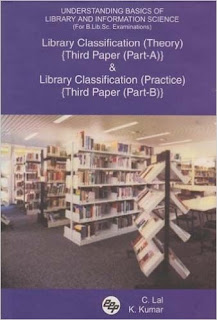
BLIS-03 : Library Classification Theory , BLIS-03P : Library Classification Practical


Hi Mithras....
Here by I am uploading the E-Books of BLIS-03 : Library Classification Theory , BLIS-03P : Library Classification Practical, to download the same please click on following Picture

Thank you...

BLIS-03 : Library Classification Theory

BLIS-03P : Library Classification Practical


Monday, November 21, 2016

BLIS-02 : Library Management


Hi Mithras....

Here by I am uploading the E-Book of BLIS-02 : Library Management to download the same please click on following Picture

Thank you...

BLIS-02 : Library Management

Friday, November 18, 2016

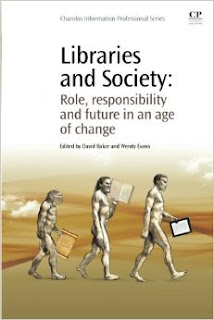
BLIS-01 : Library and Society


Hi Mithras....

Here by I am uploading the first E-Book of BLIS-01 : Library and Society to download the same please click on following Picture

Thank you...


BLIS-01 : Library and Society